When the state threatens penalties it can’t enforce, who pays? Two field experiments in Madhya Pradesh show the credibility of the messenger — not the threat itself — drives whether households pay their electricity bills.
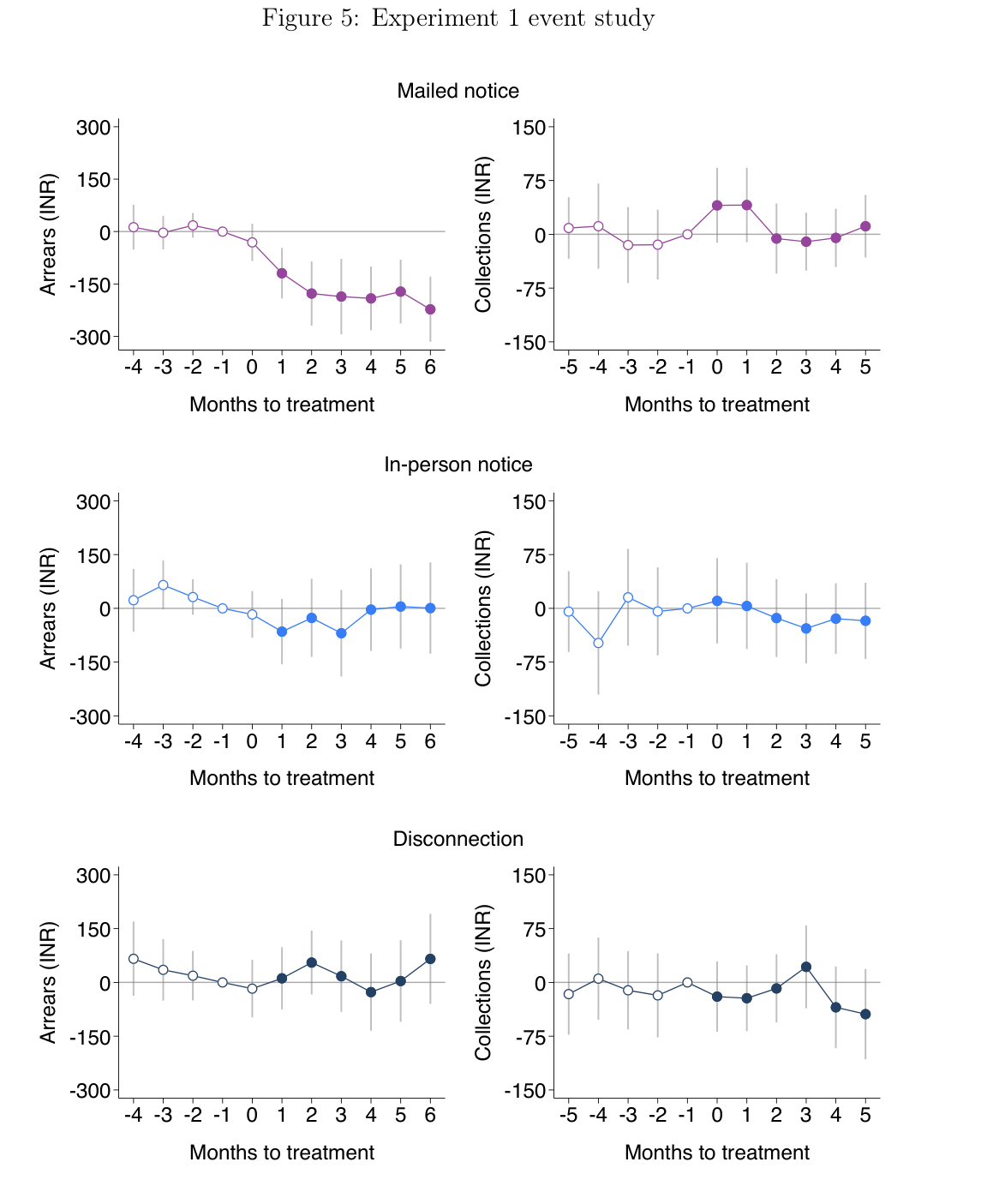
Developing-country governments routinely attempt to collect revenue using threats they cannot systematically enforce. We study how citizens assess the credibility of such empty threats in the context of payment for electricity in Madhya Pradesh, India, where state-run utilities recovered only 60 cents per dollar of power supplied. Using two field experiments covering 30,000 households with high arrears, we show that the household response to a threat depends on the state's choice of messenger. Legal threats delivered by local linesmen — state agents with a history of ignoring non-payment — have no effect. Yet identical notices sent by registered mail, bypassing linesmen, reduce arrears by 11.4 percent among recipients, a 241 percent return on investment. A second experiment a year later shows these effects are dynamic: consumers originally visited by a linesman do not respond to future notices, while those never exposed to linesmen do. Low-credibility state agents can render threats ineffective.
A mailed legal notice cuts arrears; an in-person notice from linesmen does not — Fig. 5.
2026
The Demand for Electricity on the Global Electrification Frontier
Conditionally Accepted , Journal of Political Economy
Anant Sudarshan (with Robin Burgess, Michael Greenstone, Nicholas Ryan)
Experimentally estimating demand for electricity across all sources in Bihar — and finding household surplus from electrification tripled, with off-grid solar nearly as important as the grid.
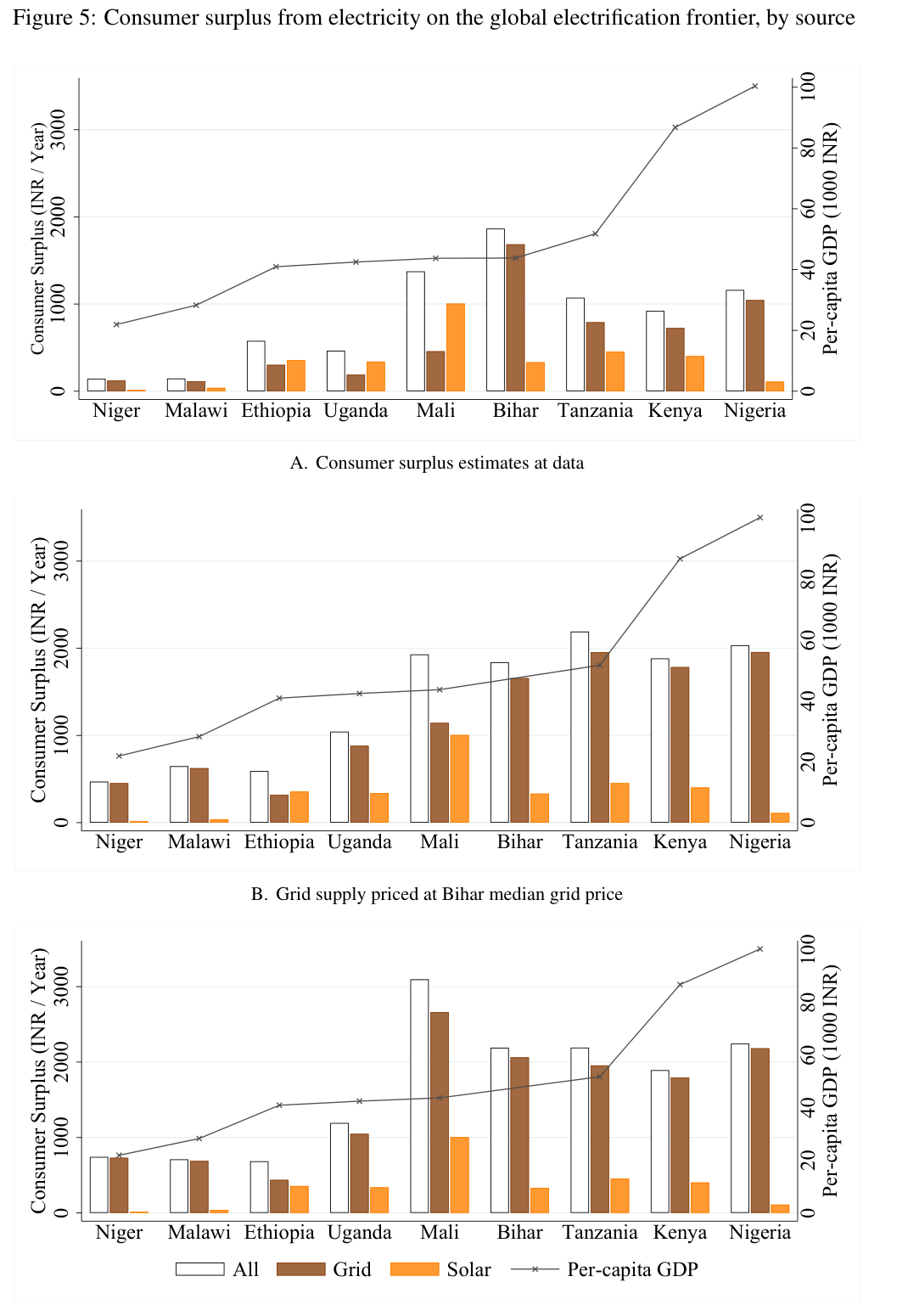
The global electrification frontier is the set of places where households are getting electricity for the first time. The advent of off-grid solar means many households now choose between competing electricity sources. This paper estimates the demand for electricity, over all available sources, to understand how poor households make this choice and to value electrification. The setting is Bihar, India, where an experiment introduced solar microgrids and varied their price across 100 village-level markets for two and a half years. Combining the experiment with detailed survey data, we model household choices over a four-year period in which electrification rates leapt from 27% to 64%. Household surplus from electrification tripled, with gains due nearly as much to off-grid solar as to the subsidized grid; the surplus from electrification is 3–5× greater than from any single source. Nonetheless, we project future electrification will come mainly from the grid, as households prefer it as they grow wealthier.
Consumer surplus from electrification, split by grid versus solar, across countries — Fig. 5.
2026
The Value of Clean Water: Experimental Evidence from Rural India
American Economic Review
Anant Sudarshan (with Fiona Burlig, Amir Jina)
A 60,000-household randomized trial delivering treated water to rural homes: at low prices take-up topped 90%, and willingness to pay proved far higher than earlier indirect estimates implied.
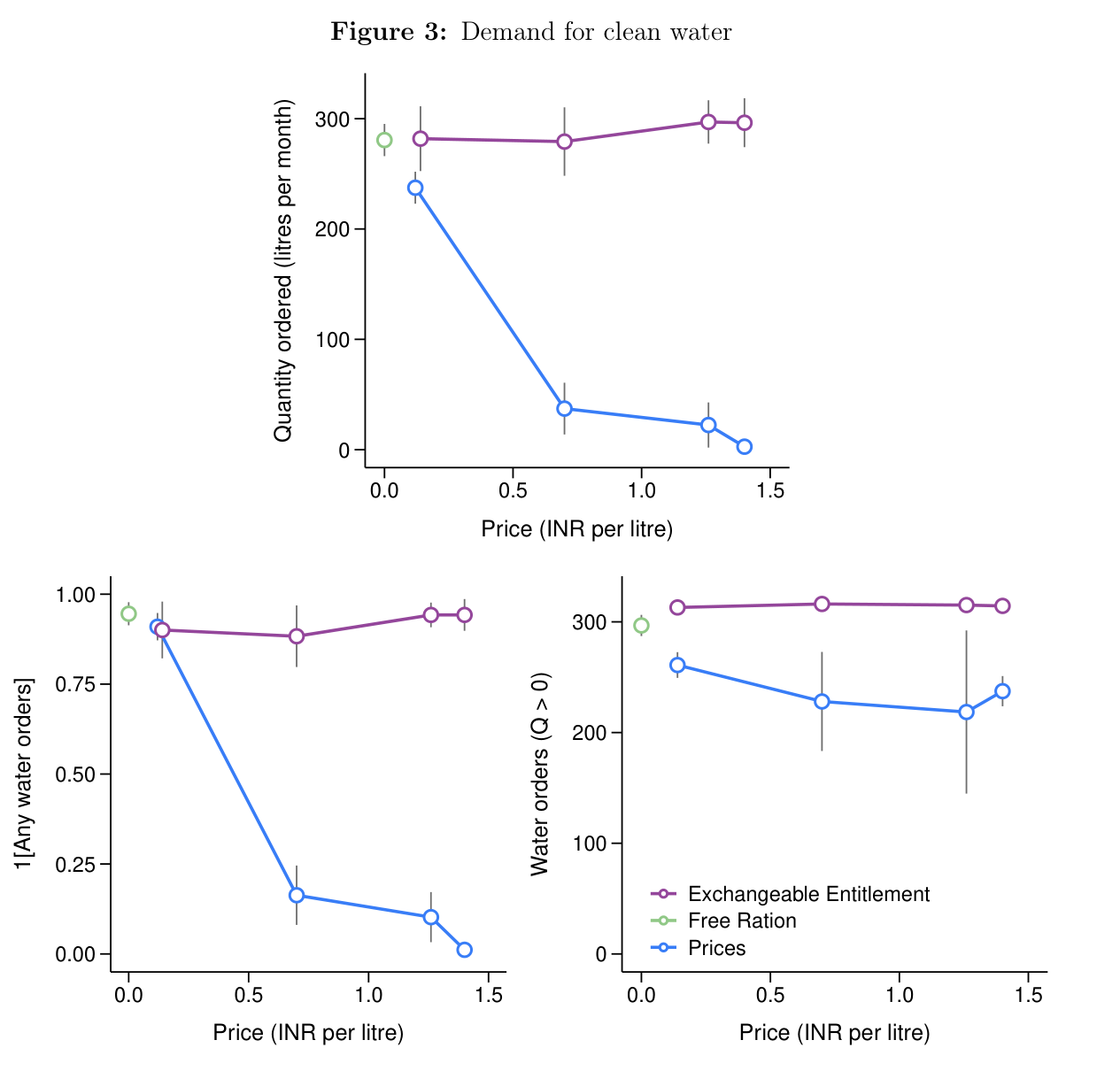
Over 2 billion people lack clean drinking water. Existing solutions face high costs (piped water) or low demand (point-of-use chlorine). Using a 60,000-household cluster-randomized experiment, we test an alternative approach: decentralized treatment and home-delivery of clean water to the rural poor. At low prices, take-up exceeds 90 percent, sustained throughout the experiment. High prices reduce take-up but are privately profitable. We experimentally recover revealed-preference measures of valuation: willingness-to-pay is several times higher than prior indirect estimates, and willingness-to-accept is larger and exceeds marginal cost. Self-reported health measures improve accordingly. On a cost-per-DALY basis, free water-delivery regimes appear highly cost-effective.
Demand falls steeply with price, yet stays high under an exchangeable quota — Fig. 3.
2026
Can Pollution Markets Work in Developing Countries? Experimental Evidence from India
Quarterly Journal of Economics
Anant Sudarshan (with Michael Greenstone, Rohini Pande, Nicholas Ryan)
We built and ran the world’s first market for particulate air pollution — a cap-and-trade scheme among industrial plants in Surat — as a randomized controlled trial, and found it cut emissions while lowering firms’ costs.
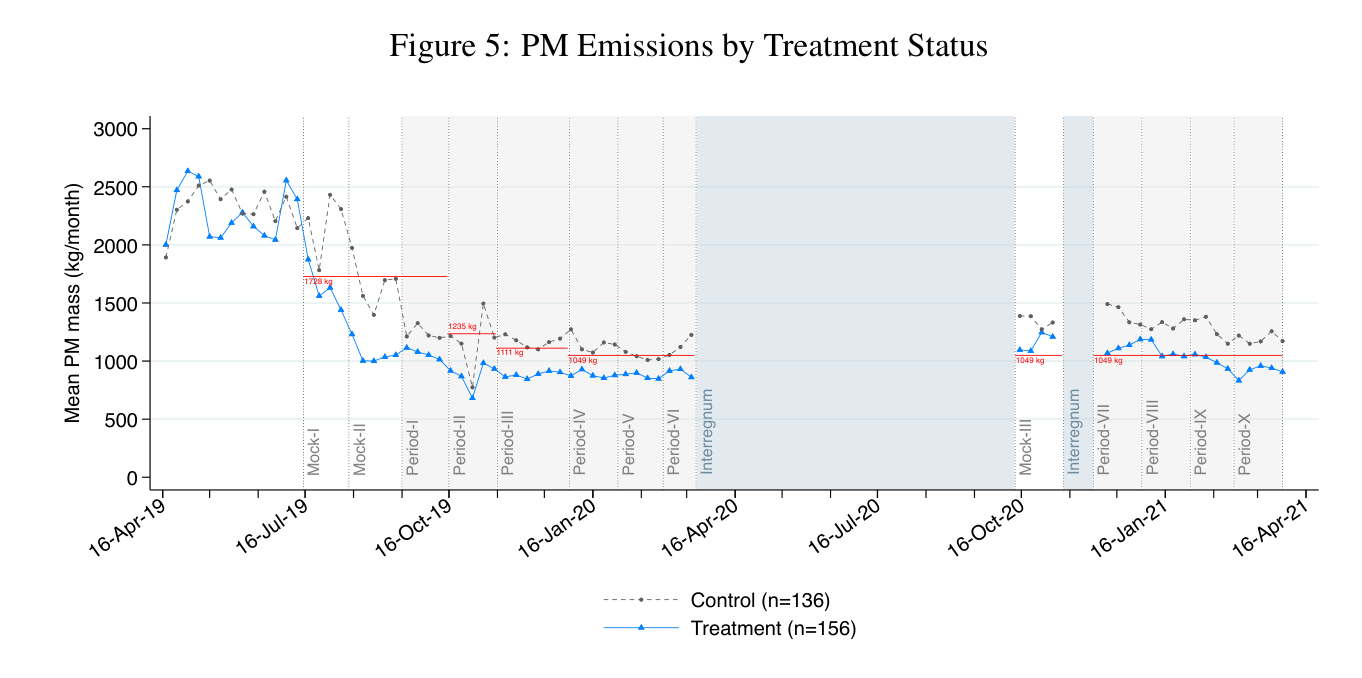
Market-based environmental regulations are seldom used in low-income countries, where pollution is highest but state capacity is often low. We collaborated with the Gujarat Pollution Control Board to design and experimentally evaluate the world's first particulate-matter emissions market, covering industrial plants in a large Indian city. There are three main findings. First, the market functioned well: treatment plants, randomly assigned to the market, traded permits to become significant net sellers or buyers, and after trading held enough permits to cover their emissions 99% of the time, compared to just 66% compliance under the command-and-control status quo. Second, treatment plants reduced emissions, relative to control plants, by 20% to 30%. Third, the market reduced abatement costs by an estimated 11%, holding emissions constant. Together, the pollution reductions and low costs imply mortality benefits that exceed the market's costs by at least twenty-five times.
Treatment plants (blue) fall below control (grey) once the market begins — Fig. 5.
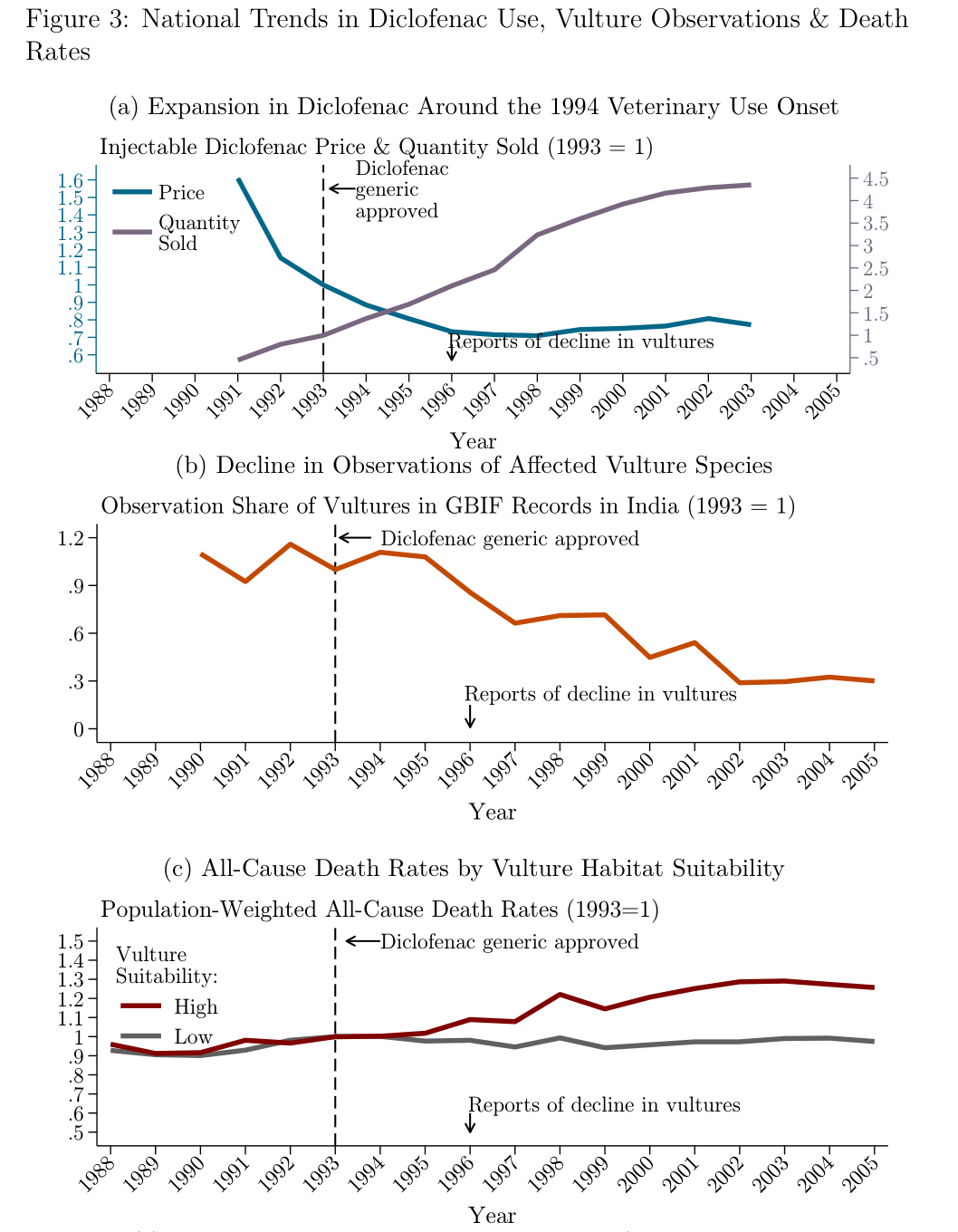
When India’s vultures collapsed, the carcasses they once cleared away started spreading disease — and human death rates rose by more than 4%. We put a price on what losing a keystone species costs people.
Scientific evidence has documented that we are undergoing a mass extinction of species, caused by human activity. However, allocating conservation resources is difficult due to scarce evidence on the damages from losing individual species. This paper studies the collapse of vultures in India, triggered by the expiry of a patent on a painkiller. Our results suggest the functional extinction of vultures — efficient scavengers that removed carcasses from the environment — increased human mortality by over 4 percent because of a large negative shock to sanitation. We quantify damages at $69.4 billion per year. These results suggest high returns to conserving keystone species such as vultures.
As diclofenac use rose, vultures collapsed and death rates climbed in vulture-suited districts — Fig. 3.
Modeling Fine-Grained Spatio-Temporal Pollution Maps with Low-Cost Sensors
npj Climate and Atmospheric Science
Anant Sudarshan (with Shiva Iyer, Ananth Balashankar, William H. Aeberhard, Ulzee An, Sujoy Bhattacharya, Giuditta Rusconi, Rohini Pande, Lakshminarayan Subramanian)
Turning sparse networks of low-cost sensors into fine-grained, real-time maps of urban air pollution — the measurement backbone for monitoring and regulating dirty air.
The use of air quality monitoring networks to inform urban policies is critical, especially where populations are exposed to unprecedented levels of air pollution. High costs, however, limit city governments' ability to deploy reference-grade monitors at scale — only 33 reference-grade monitors serve all of Delhi (1,500 sq km, 15 million residents). We describe a high-precision spatio-temporal prediction model that derives fine-grained pollution maps from two years of data from a low-cost network of 28 custom-designed portable sensors. Combining message-passing recurrent neural networks with conventional spatio-temporal geostatistics, the model achieves high accuracy despite high data variability and intermittent availability, predicting within 1-hour windows at 9.4–10.5% mean absolute percentage error. These fine-grained maps offer a path to citizen-driven low-cost monitoring of hazardous urban air quality.
2022
Rationing the Commons
Journal of Political Economy
Anant Sudarshan (with Nicholas Ryan)
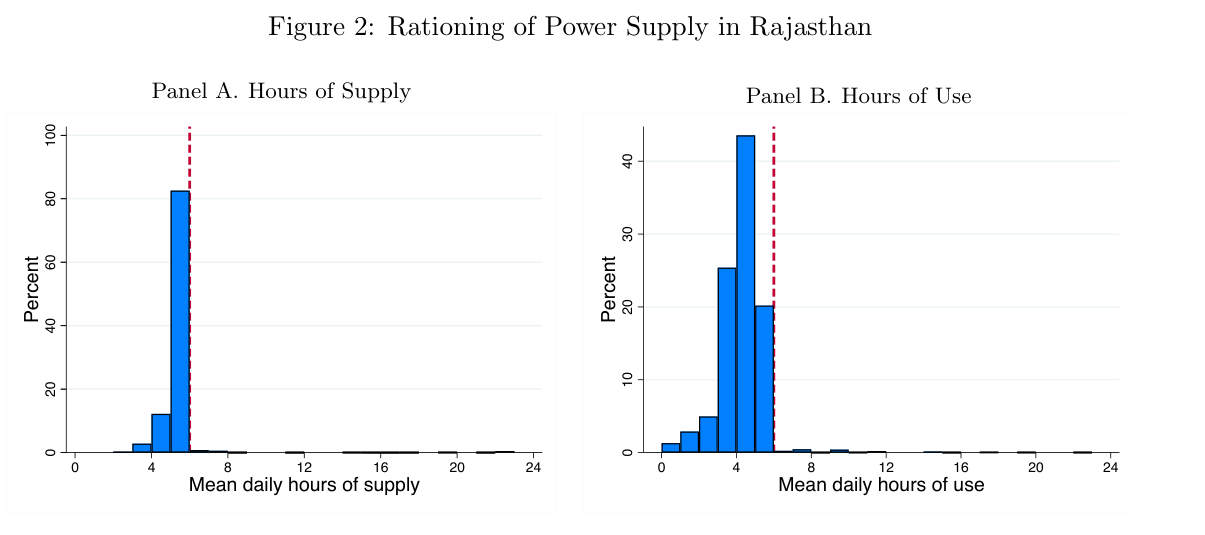
When a shared resource is rationed by quantity rather than priced — here, the subsidized electricity Indian farmers use to pump groundwater — how much efficiency is lost, and what does it mean for the resource itself?
Common resources may be managed with inefficient policies for the sake of equity. We study how rationing the commons shapes the efficiency and equity of resource use, in the context of agricultural groundwater use in Rajasthan, India. We find that rationing binds on input use, such that farmers, despite trivial prices for water extraction, use roughly the socially optimal amount of water on average. The rationing regime is still grossly inefficient, because it misallocates water across farmers, lowering productivity. Pigouvian reform would increase agricultural surplus by 12% of household income, yet fall well short of a Pareto improvement over rationing.
Farm power is rationed — supply bunches near five hours a day — Fig. 2.
2022
The Impact of Domestic Travel Bans on COVID-19 is Nonlinear in Their Duration
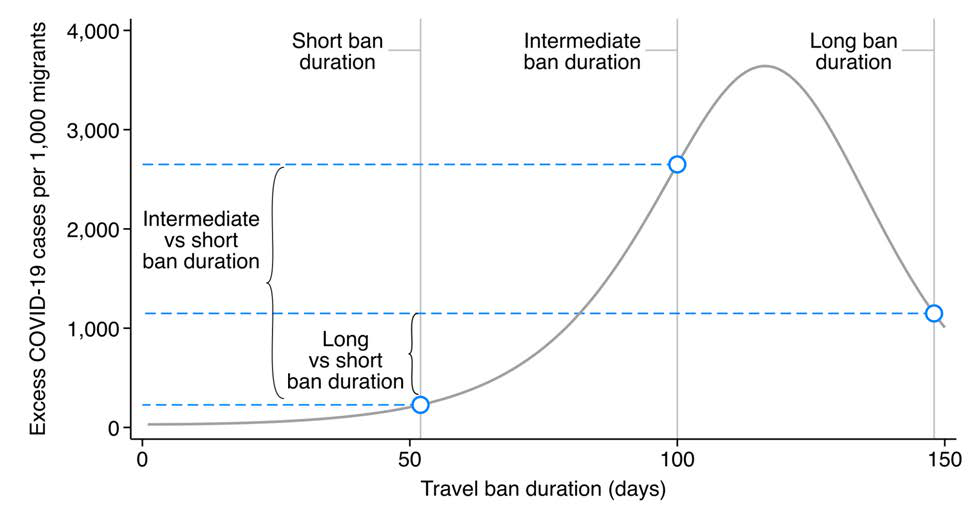
Domestic mobility bans during COVID-19 can backfire: moderately long restrictions trapped migrant workers in hotspots and substantially increased infections.
Domestic mobility restrictions to control the spread of COVID-19 are widespread in developing countries, and have trapped millions of migrant workers in hotspot cities. In this paper we show that bans can increase cumulative infections relative to a counterfactual without restrictions. A SEIR model shows that bans' impacts are nonlinear in duration. We test this hypothesis empirically using a natural experiment in India as well as data from China, Indonesia, the Philippines, South Africa, and Kenya. Although very short and very long restrictions limit the spread of disease, moderately lengthy restrictions substantially increase infections. This underscores the importance of considering duration in mobility-restricting policy decisions in developing countries.
Predicted excess cases are non-linear in ban duration — intermediate bans are worst (Fig. 1).
2021
The Impact of Temperature on Productivity and Labor Supply: Evidence from Indian Manufacturing
Journal of Political Economy
Anant Sudarshan (with E. Somanathan, Rohini Somanathan, Meenu Tewari)
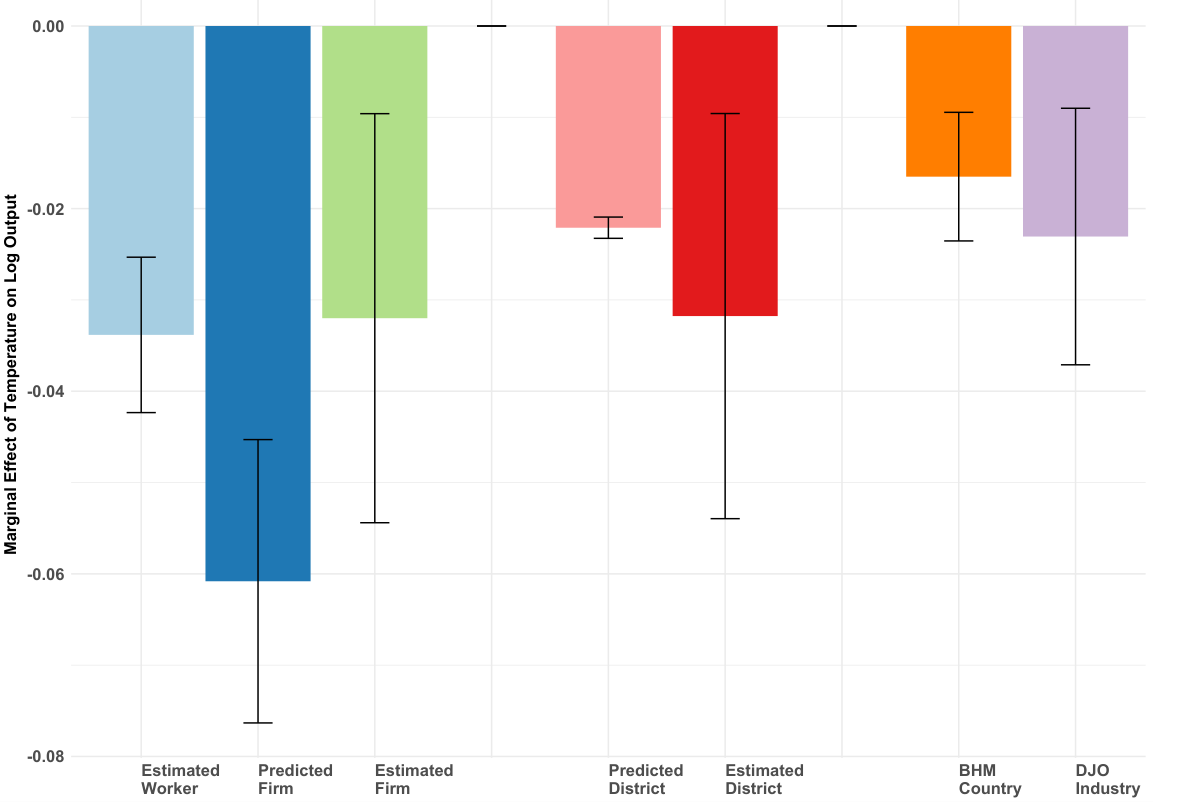
Hot days measurably lower output in Indian factories — by cutting both how much workers produce per hour and how many hours they show up — and climate control only partly offsets it.
Hotter years are associated with lower economic output in developing countries. We show that the effect of temperature on labor is an important part of the explanation. Using microdata from selected firms in India, we estimate reduced worker productivity and increased absenteeism on hot days. Climate control significantly mitigates productivity losses. In a national panel of Indian factories, annual plant output falls by about 2% per degree Celsius. This response appears to be driven by a reduction in the output elasticity of labor. Our estimates are large enough to explain previously observed output losses in cross-country panels.
The marginal effect of temperature on output is consistently negative across estimates — Fig. 6.
The Consequences of Treating Electricity as a Right
Journal of Economic Perspectives
Anant Sudarshan (with Robin Burgess, Michael Greenstone, Nicholas Ryan)
Why do billions of people still lack reliable power? When electricity is treated as a right rather than a service to be paid for, it can set off a self-reinforcing cycle of non-payment, losses and rationing.
This paper seeks to explain why billions of people in developing countries either have no access to electricity or lack a reliable supply. We present evidence that these shortfalls are a consequence of electricity being treated as a right and that this sets off a vicious four-step circle. In step 1, because a social norm has developed that all deserve power independent of payment, subsidies, theft, and nonpayment are widely tolerated. In step 2, electricity distribution companies lose money with each unit of electricity sold and in total lose large sums of money. In step 3, government-owned distribution companies ration supply to limit losses by restricting access and hours of supply. In step 4, power supply is no longer governed by market forces and the link between payment and supply is severed, reducing customers' incentives to pay. The equilibrium outcome is uneven and sporadic access that undermines growth.
This paper provides field evidence from India examining changes in electricity consumption in response to various behavioral interventions. I study the impact of (i) weekly reports with peer comparisons of electricity use; (ii) reports augmented with monetary incentives to reduce consumption; and (iii) price variation. I estimate consumption changes using a randomized controlled trial in conjunction with a quasi-experiment. Households provided reports alone reduced summer-season consumption by 7 percent. The price elasticity identified from cross-sectional and time-series variation was about −0.56; against this benchmark, the impact of peer comparisons alone was equivalent to raising tariffs by about 12.5 percent. Counter-intuitively, when weekly reports were augmented with monetary incentives rewarding conservation, households no longer reduced consumption. Households receiving reports also show higher price elasticity relative to controls.
2017
Lower Pollution, Longer Lives: Life Expectancy Gains if India Reduced Particulate Matter Pollution
Economic and Political Weekly
Anant Sudarshan (with Michael Greenstone, Janhavi Nilekani, Rohini Pande, Nicholas Ryan, Anish Sugathan)
Over half of India’s population lives where particulate pollution exceeds national standards; meeting them would add an estimated 3.2 years of life expectancy on average.
India's population is exposed to dangerously high levels of air pollution. Using a combination of ground-level in-situ measurements and satellite-based remote sensing data, this paper estimates that 660 million people — over half of India's population — live in areas that exceed the Indian National Ambient Air Quality Standard for fine particulate pollution. Reducing pollution in these areas to achieve the standard would, we estimate, increase life expectancy for these Indians by 3.2 years on average, for a total of 2.1 billion life-years. We outline directions for environmental policy to start achieving these gains.
Deconstructing the 'Rosenfeld Curve': Making Sense of California's Low Electricity Intensity
Energy Economics
Anant Sudarshan
Why is California’s electricity use per dollar of output so low? Much of the famous “Rosenfeld Curve” turns out to reflect structure and prices, not efficiency policy alone.
Regulatory regimes that have increased household energy efficiency are of widespread interest to policymakers today. A prominent example is California, where residential electricity intensities have stayed near constant since the 1970s, in sharp contrast to nationwide trends in the United States. A structural model of residential energy consumption is used to show that using energy intensities alone to evaluate the success of California's efficiency programs is misleading and glosses over important policy-independent factors. We quantify the effects of price, climate conditions and demographic characteristics on energy consumption in California, and provide evidence of split-incentive considerations in residential energy consumption patterns. We conclude that while state policy may have had some effect on efficiency, caution needs to be exercised in using the California example to inform expectations from similar measures in other regions.
2013
Real-time Feedback and Electricity Consumption: A Field Experiment Assessing the Potential for Savings and Persistence
The Energy Journal
Anant Sudarshan (with Sebastien Houde, Annika Todd, June A. Flora, K. Carrie Armel)
A field test of real-time home energy feedback (Google PowerMeter): access to feedback cut household electricity use by about 5.7%, with effects persisting for weeks.
Real-time information feedback delivered via technology has been reported to produce up to 20 percent declines in residential energy consumption, though estimates vary widely. In this study we conduct a field experiment to estimate the impact of a real-time feedback technology (Google PowerMeter). Access to feedback leads to an average reduction in household electricity consumption of 5.7 percent, and significant declines persist for up to four weeks. Examining time-of-day effects, the largest reductions are observed initially at all times of day, but as time passes the morning and evening intervals show larger reductions. We find no convincing evidence that household characteristics explain heterogeneity in our treatment effects.
2013
Transport and Carbon Emissions in the United States: The Long View
Energies
Anant Sudarshan (with Lee Schipper, Calanit Saenger)
A 1960–2008 decomposition of US transport CO₂ emissions — separating the roles of growth, mode shift, fuel intensity and the carbon content of fuels — to inform climate-minded transport policy.
This analysis traces U.S. transport CO2 emissions in combustion by mode for 1960–2008. Changes in emissions are divided into components related to overall population and economic growth, transport mode shift, changes in the ratio of fuel used to passenger- or tonne-km of activity, and changes in the CO2 content of fuels. Where data permit we show how changes in vehicle utilization affected CO2 emissions. A Log-Mean Divisia Index and Laspeyres decompositions of the 1960–2008 changes are calculated. From this decomposition we speculate to what extent the factors associated with increases in CO2 emissions since 1960 would be important in the future, and what other factors could reduce emissions.
2011
How Can Economic Schemes Curtail the Increasing Sex Ratio at Birth in China?
Demographic Research
Anant Sudarshan (with Debarun Bhattacharjya, Shripad Tuljapurkar, Ross Shachter, Marcus Feldman)
A model of why families sex-select in China — and how economic schemes such as pensions for sonless families might curb a rising sex ratio at birth.
Fertility decline, driven by the one-child policy, and son preference have contributed to an alarming difference in the number of live male and female births in China. We present a quantitative model in which people choose to sex-select because they perceive that married sons are more valuable than married daughters. Due to the predominant patrilocal kinship system in China, daughters-in-law provide valuable emotional and financial support, enhancing the perceived present value of married sons. We argue that inter-generational transfer data will help ascertain the extent to which economic schemes (such as pension plans for families with no sons) can curtail the increasing sex ratio at birth.
2008
Weather Data Mining Using Independent Component Analysis
Journal of Machine Learning Research
Anant Sudarshan (with Jayanta Basak, Deepak Trivedi, M. S. Santhanam)
Applying independent component analysis to mine spatio-temporal weather data — recovering the North Atlantic Oscillation’s synoptic patterns directly from the data.
In this article we apply the independent component analysis technique for mining spatio-temporal data. The technique is applied to mine for patterns in weather data using the North Atlantic Oscillation (NAO) as a specific example. We find that the strongest independent components match the observed synoptic weather patterns corresponding to the NAO. We also validate our results by matching the independent component activities with the NAO index.